

TMJ & Headaches London
TMJ & Headaches
Jaw pain, tension headaches, clicking when you chew, and limited jaw movement can sometimes be associated with problems involving the temporomandibular joints (TMJ) and the muscles that control your jaw. At Synergy Centre Dental in London, Ontario, TMJ treatment begins with a detailed assessment to determine whether your symptoms may be related to your bite, jaw joints, muscles, or other factors.
Common TMJ Symptoms
- Tension headaches and facial pain
- Jaw pain, tenderness, or fatigue
- Clicking, popping, or other jaw sounds
- Neck and shoulder tension
- Jaw locking or limited range of motion
- Teeth grinding or jaw clenching
When to Seek an Evaluation
Persistent jaw pain, recurring headaches, difficulty opening your mouth, or changes in how your teeth come together may warrant a dental evaluation. A thorough assessment can help determine whether your symptoms are related to TMJ dysfunction or another condition.
Important: Headaches can have many possible causes, including sinus problems, vision issues, migraine, and other medical conditions. Sudden or severe headaches should be assessed promptly by a medical professional.
TMJ & Neuromuscular Dentistry in London, Ontario
Dr. Octavian Tetelbaum is a general and cosmetic dentist serving patients in London, Ontario. His additional training includes advanced coursework through the LVI Centre for Advanced Dental Studies, with an emphasis on evaluating the relationship between the teeth, jaw joints, and muscles.
TMJ assessment looks beyond the teeth alone. By examining how the jaw joints, muscles, and bite work together, the dental team can develop a treatment plan based on the patient's symptoms, examination findings, and individual needs.
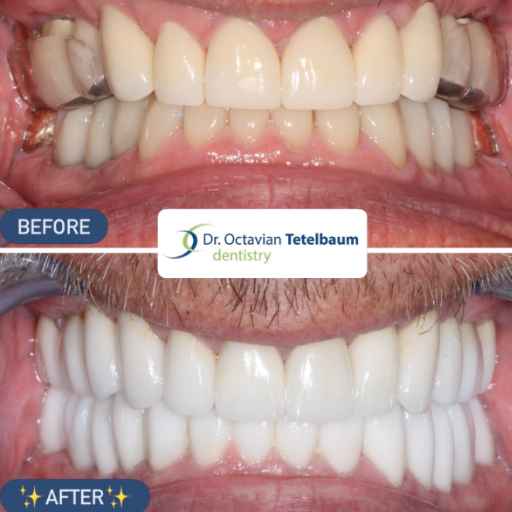
TMJ Treatment Case Study
Addressing Bite and Jaw Function
This patient presented with symptoms that included chronic facial discomfort, tongue discomfort, and numbness associated with a severely misaligned bite. Because jaw symptoms can involve multiple factors, the patient's bite and overall jaw function were evaluated as part of the treatment planning process.
Full-mouth reconstruction was selected as part of the treatment plan. Custom all-ceramic porcelain crowns were used to restore the shape, height, and function of the teeth while improving the overall relationship between the upper and lower arches.
The completed restoration was designed to provide a more balanced bite while also improving the appearance and function of the patient's smile.
Comprehensive TMJ Diagnosis & Evaluation
At Synergy Centre Dental, TMJ treatment starts with understanding your symptoms and how your jaw functions. If TMJ dysfunction is suspected, your assessment may include several components depending on your individual needs.
Medical & Sleep History
A review of your medical history, symptoms, sleep patterns, jaw clenching, and teeth grinding can provide important information about your overall condition.
Jaw & Muscle Examination
The jaw joints, muscles, range of motion, and surrounding structures can be examined for signs of tenderness, dysfunction, or restricted movement.
Bite Analysis
Dental impressions and bite registrations may be used to evaluate the relationship between your upper and lower teeth.
Diagnostic Imaging
When appropriate, dental X-rays and other diagnostic imaging can help evaluate the jaw joints and surrounding structures.
Our Two-Phase Approach to TMJ Treatment
TMJ treatment can vary considerably from one patient to another. When appropriate, treatment may be approached in stages, beginning with symptom management and progressing to longer-term correction when necessary.
Phase 1: Symptom & Pain Management
The initial goal is to reduce discomfort and improve jaw function. Depending on your assessment, treatment may include:
- TENS: Transcutaneous electrical nerve stimulation may be used to help relax jaw muscles and manage discomfort.
- Neuromuscular dental orthotics: Custom appliances may be used to help manage clenching, grinding, and bite-related muscle tension.
- Collaborative care: Patients may have access to physiotherapy, chiropractic care, and registered massage therapy through the Synergy Centre team when appropriate.
Phase 2: Long-Term Bite Correction
Once symptoms have been evaluated and managed, some patients may benefit from treatment designed to address underlying bite or dental problems.
- Enameloplasty: Minor reshaping of tooth surfaces may help adjust specific areas of the bite.
- Orthodontics: Orthodontic treatment can reposition teeth and improve their relationship within the dental arches.
- Restorative dentistry: Crowns, ceramic restorations, or dental implants may be considered when damaged or missing teeth contribute to functional concerns.
- Surgical referral: Patients with significant structural problems may require consultation with an appropriate oral and maxillofacial or TMJ surgeon.
TMJ Treatment for Jaw Pain and Tension Headaches in London
Jaw pain and recurring tension headaches can have several possible causes. If you suspect that your jaw, bite, or teeth may be contributing to your symptoms, a comprehensive TMJ evaluation can help identify potential contributing factors and determine whether dental treatment may be appropriate.
At Synergy Centre Dental, treatment is planned around your individual symptoms, examination findings, and oral health rather than using a one-size-fits-all approach.
Schedule a TMJ Consultation in London, Ontario
If you are experiencing persistent jaw pain, tension headaches, jaw clicking, or difficulty moving your jaw, contact Synergy Centre Dental to discuss your symptoms and arrange an assessment.
Call Synergy Centre Dental at (519) 266-3646 to schedule a TMJ consultation with Dr. Octavian Tetelbaum.
Coming soon: Medical Botox treatment for headache management, provided by Dr. Maria Tetelbaum, MD, CCFP.
Book Online
Synergy Dental offers the ability to request your dentist appointments online. Schedule an appointment now!
Book Online